The Vanguard
General James Edward Oglethorpe recruited Scottish Highlanders from northern Scotland to provide a buffer between the newly established English colonies to the north and the Spanish in Florida to the south. The first recruited by Oglethorpe was Hugh MacKay, son of Lord Reay MacKay, someone who could speak with the unruly highlanders. Oglethorpe knew living in the remote windswept highlands were some of fiercest fighters in the world and MacKay knew the Mackintoshes and their kinsman were the fiercest among them. Oglethorpe needed a tenacious group of colonists and an indomitable fighting force that could survive marauding pirates, merciless Indian attacks, and a Spanish invasion. Oglethorpe found this in the highland clan system still operating in the old feudal ways. The clans functioned as one cohesive family of men, women and children, but on a much larger scale. The Clan Chief maintaining a strict internal hierarchy had absolute authority and was considered by all to be the territorial protector and supreme leader on all matters. He alone had the power to call for “sluagh-ghairm”, the mobilization of his septs and dependents to war. The Mackintosh clan seat of Borlum was an impregnable castle sitting high overlooking the River Ness. Known as the Black Castle not for its appearance but for the black hearts the Mackintosh men shown in battle. The infamous castle guarded a narrow pass opposing any clan wanting to advance north. Forming a picquet, they sustained the first shock wave of hostilities directed against the northern clans and discharged the last parting blow on the retreat of the enemy. This battle-hardened fighting force with its clan leader John Mohr Mackintosh is what was needed if the new colony of Georgia was to survive. As the military and civilian leader, Mackintosh recruited 177 kinsmen with their dependents and sailed to America. In 1736 they founded New Inverness (Darien) and befriended the once hostile Indians. The Gaelic speaking community thrived and prospered until 1740 when war broke out with Spain. A combined Spanish armada of 46 sailing vessels carrying upwards of 5,000 men set sail from St. Augustine to invade all British-held territories. Governor Manuel de Montiano had orders to first assault St. Simons Island then continue up the Atlantic coast and lay waste to every town as far north as the Carolinas. But the Spanish soldiers met defiance in the Scottish claymore. In 1742 the Spanish were overwhelmingly defeated at the battle of Bloody Marsh. The battle was relatively small in comparison, but momentous in consequence. It played the pivotal role in stopping the massive invasion force of the Spanish armada. The culmination of these events was a defining moment in colonial history, thereafter the Spanish gave up their claims to all debated lands above La Florida. Descendants of John Mohr Mackintosh are known in history as the “Fighting Macintoshes”, served with distinction across multiple generations in all the military conflicts, from the Revolutionary War through the Mexican-American and the Civil War producing countless heroic Generals, field officers and soldiers. An extraordinary Gaelic speaking juggernaut that shaped much of what America is today.
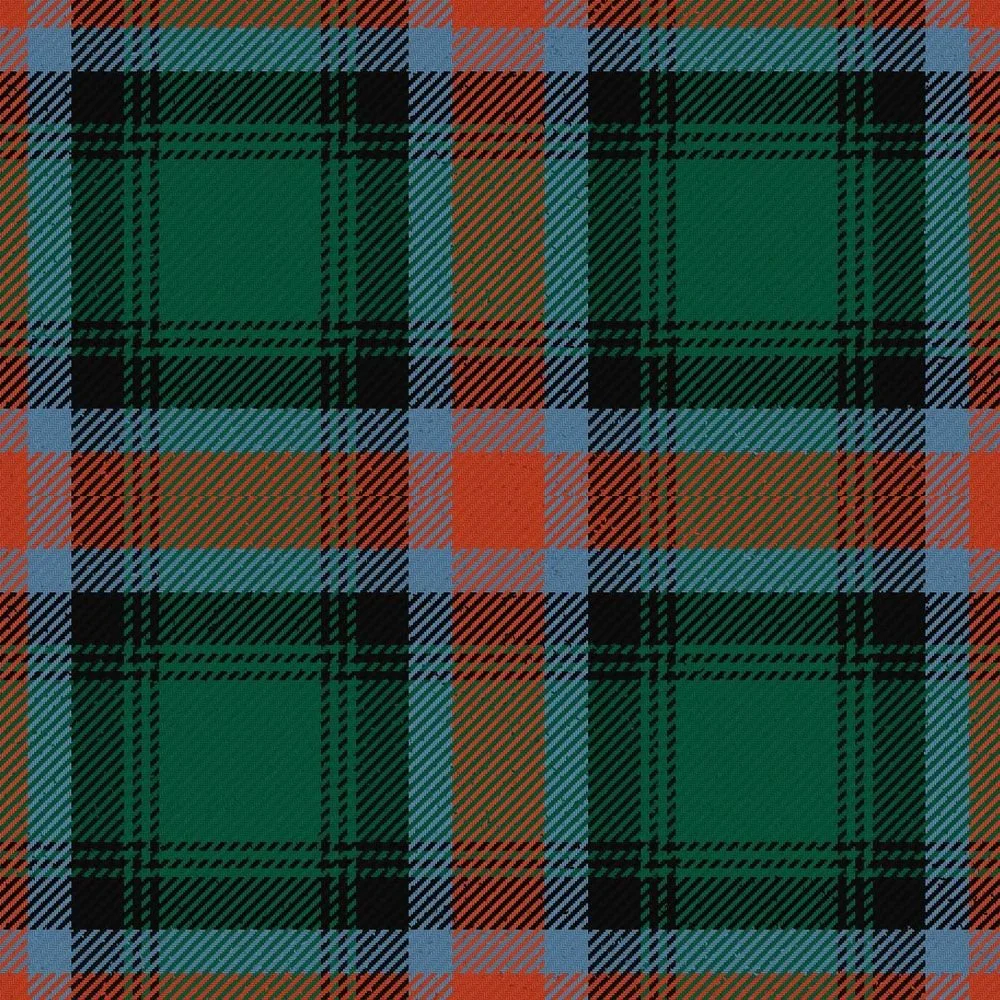
OFFICIAL STATE OF GEORGIA TARTAN: Whereas both the pattern and colors of the Georgia Tartan are a reflection of this state’s strong ties with Scotland. The pattern, or “sett,” comes from the earliest known Mackintosh tartan; it was John Mohr Mackintosh and Gen James Oglethorpe who repulsed the Spanish invaders and kept Georgia a British Colony; and Whereas, the red and light blue come from the Royal Tartan from the reign of King George II, which was worn by the Royal Company of Archers, the King’s personal bodyguards in Scotland. The green and black are from what once was the government pattern worn by Mackintosh’s troops and since has become world famous as the tartan worn by the Royal Highland Regiment, “The Black Watch”.